
– Solutions
Everything your search bar should have been doing
Native Shopify search matches strings, not intent. Every query it fails is a shopper who was ready to buy — and left without telling you.
The leak nobody’s watching
1 in 7
searches ends in nothing
Industry-wide, roughly one in seven storefront searches returns zero results. Every one of them is a shopper who told you exactly what they wanted, and got a blank page for it.
0
words of feedback
A failed search does not raise a support ticket. It closes a tab. Without search analytics you never learn which products your customers thought you sold.
3×
intent, versus browsing
Shoppers who use search are far closer to buying than shoppers who browse. Sending them to a dead end is the most expensive moment on your storefront.
100%
of it is measurable
Zero-result rate, click-through, add-to-cart and search-attributed checkouts are all knowable numbers. Most stores simply never look at them.
– The shift
Same catalog. Same traffic. Different outcome.
Without Growmerce
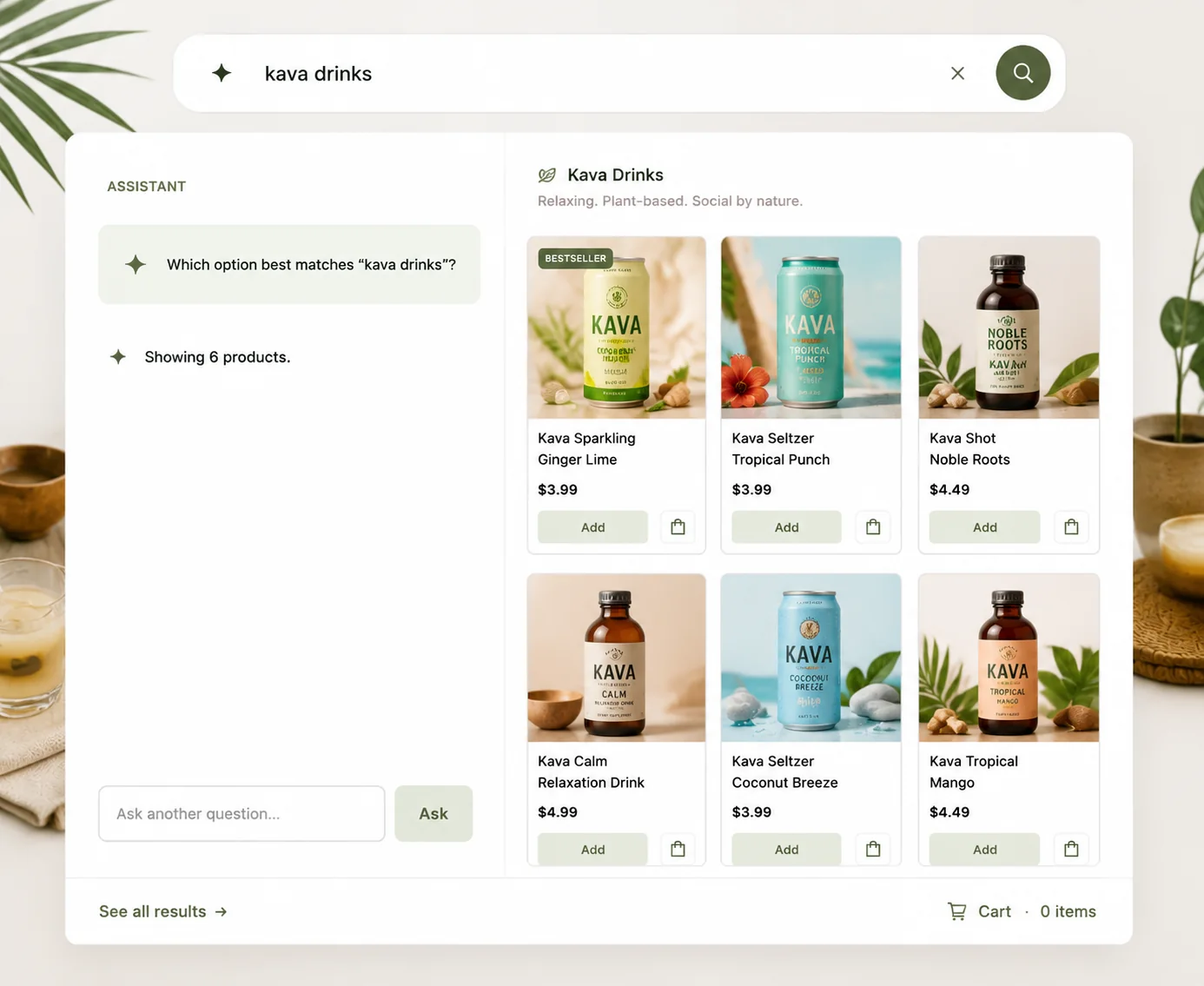
- Matches strings — “kava drinks” returns nothing
- Shopper has to learn your filter menus
- Typos and plurals quietly kill the sale
- Results page is a dead end when stock runs out
- You cannot tell which searches earned money
With Growmerce
Search that understands meaning
- Reads intent — offers the nearest real shelf instead
- “Skincare under $10” just works, no filters touched
- Corrected automatically before results render
- Close alternatives shown, ranked down but never hidden
- Search-attributed checkouts tracked to the product
What the category already shows. AI shopping assistants report 10–30% conversion lift and 16%+ AOV lift (Rep AI); assisted shoppers converted 6× better than unassisted ones at Kendra Scott (iAdvize); early access to Bloomreach’s Loomi averaged +9% CVR and +20% AOV. These are published category benchmarks from other vendors, not Growmerce results — we would rather you measured us against your own store.
Unit 01 is open.
Growsearch — live now on Shopify.
Growsearch
Storefront search that never dead-ends — and analytics that prove what search sells.
Net contents
1 Shopify storefront
GRW·05·0001
Search facts
Serving size: 1 storefront · Servings per store: unlimited
Never zero results
100%“0 results for kava drinks” becomes “we don’t have kava drinks — but you might like these Kratom Seltzers”. Typos fixed, intent understood, a real shelf offered instead of an apology.
Plain-language queries
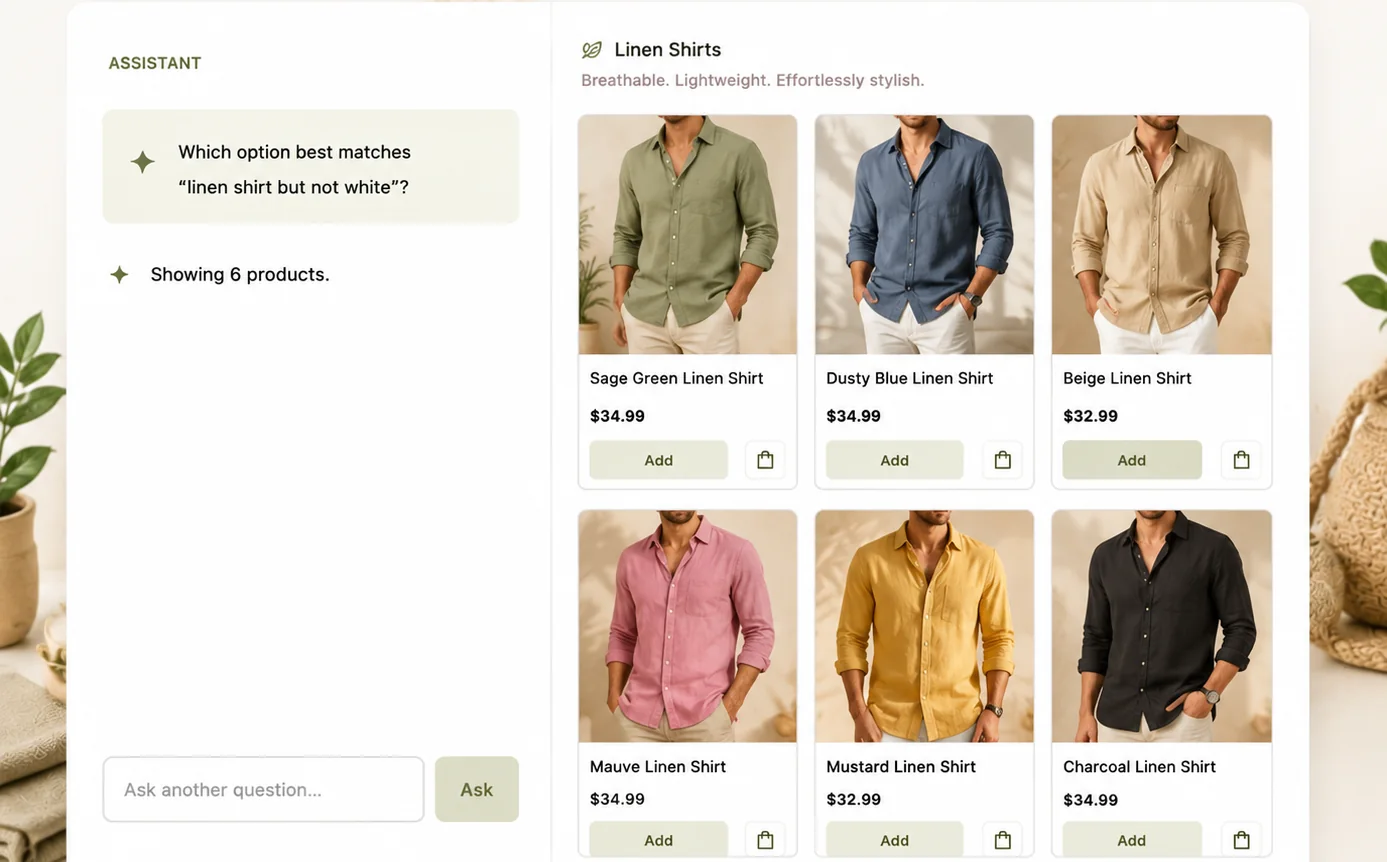
100%“skincare under $10”, “warm but not bulky”, “gift, arrives friday”. Price, attribute and intent are read straight out of the sentence — no filter archaeology.
Add to cart from results
100%Shoppers buy without leaving the results, and the cart count updates where they already are.
Search-attributed revenue
100%Searches tied to checkouts, zero-result terms surfaced as a buying list, revenue attributed to the search box.
* Percent daily value based on one storefront. Contains no replatforming, no six-week onboarding and no AI team. Fits the store you already run.
Launching now on the Shopify App Store · WooCommerce next.
Find out what your search bar has been hiding
Fourteen days, your own catalogue, your own shoppers. The zero-result list alone is usually worth the install.
Start free trialFrequentlyaskedQuestions
It sits on top. Your native results still render instantly — Growsearch layers intent matching, recovery and ranking over them, so the shopper never waits on a model and nothing breaks if the AI has an off day.
No. Filters make the shopper do the work of narrowing. Growsearch reads the narrowing out of their sentence, and lets them keep adjusting it in conversation — “only under $20”, “actually show me sunscreens instead”.
Within the trial. Zero-result rate and search-attributed checkouts are visible from day one, so the comparison is against your own store's numbers rather than a case study.
That's the case it's built for. Metafields and custom attributes are indexed, out-of-stock items are ranked down rather than hidden, and drafts and archived products are excluded.