Ecommerce Conversion Rate Optimization: A Practical CRO Guide
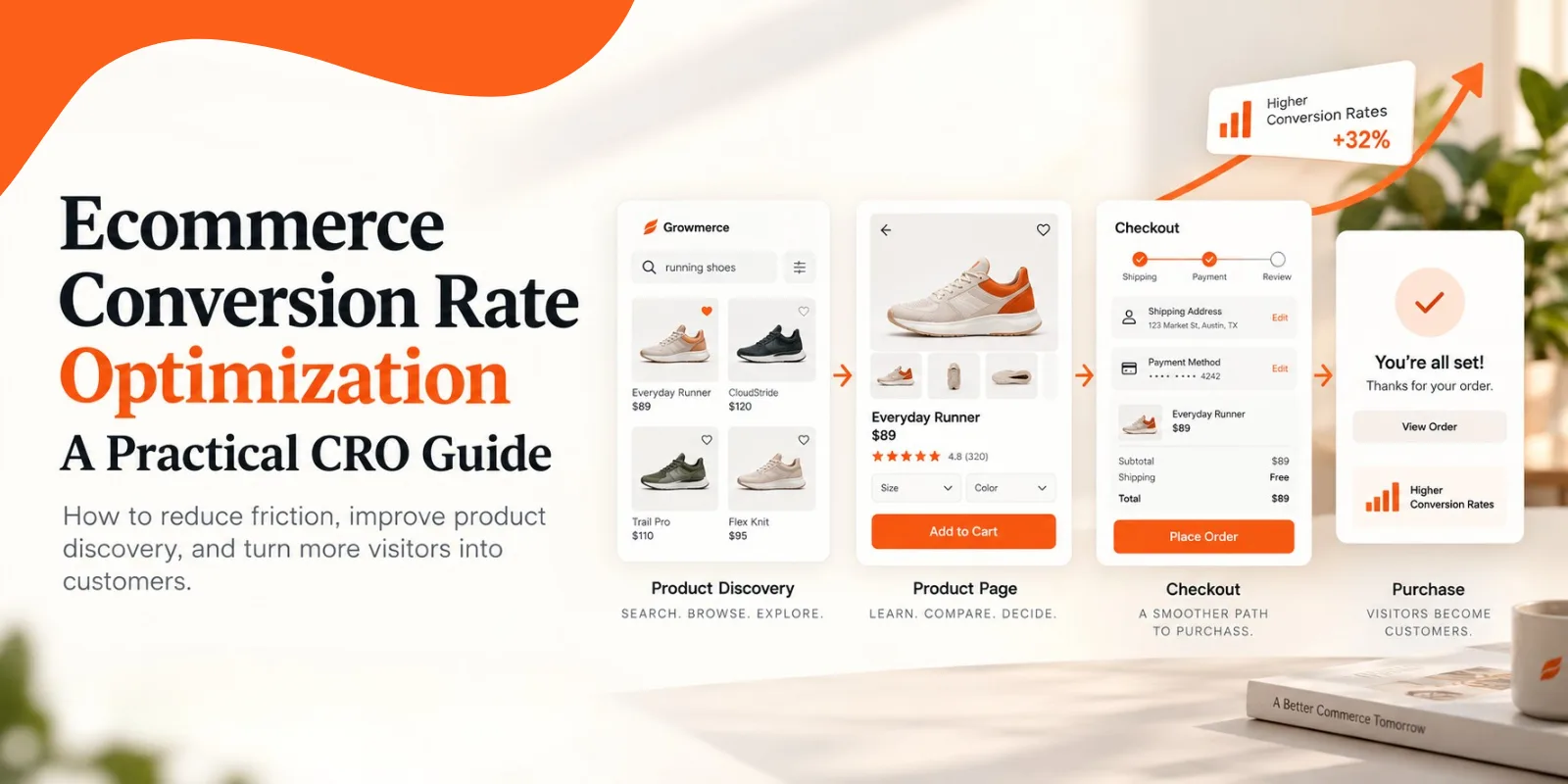
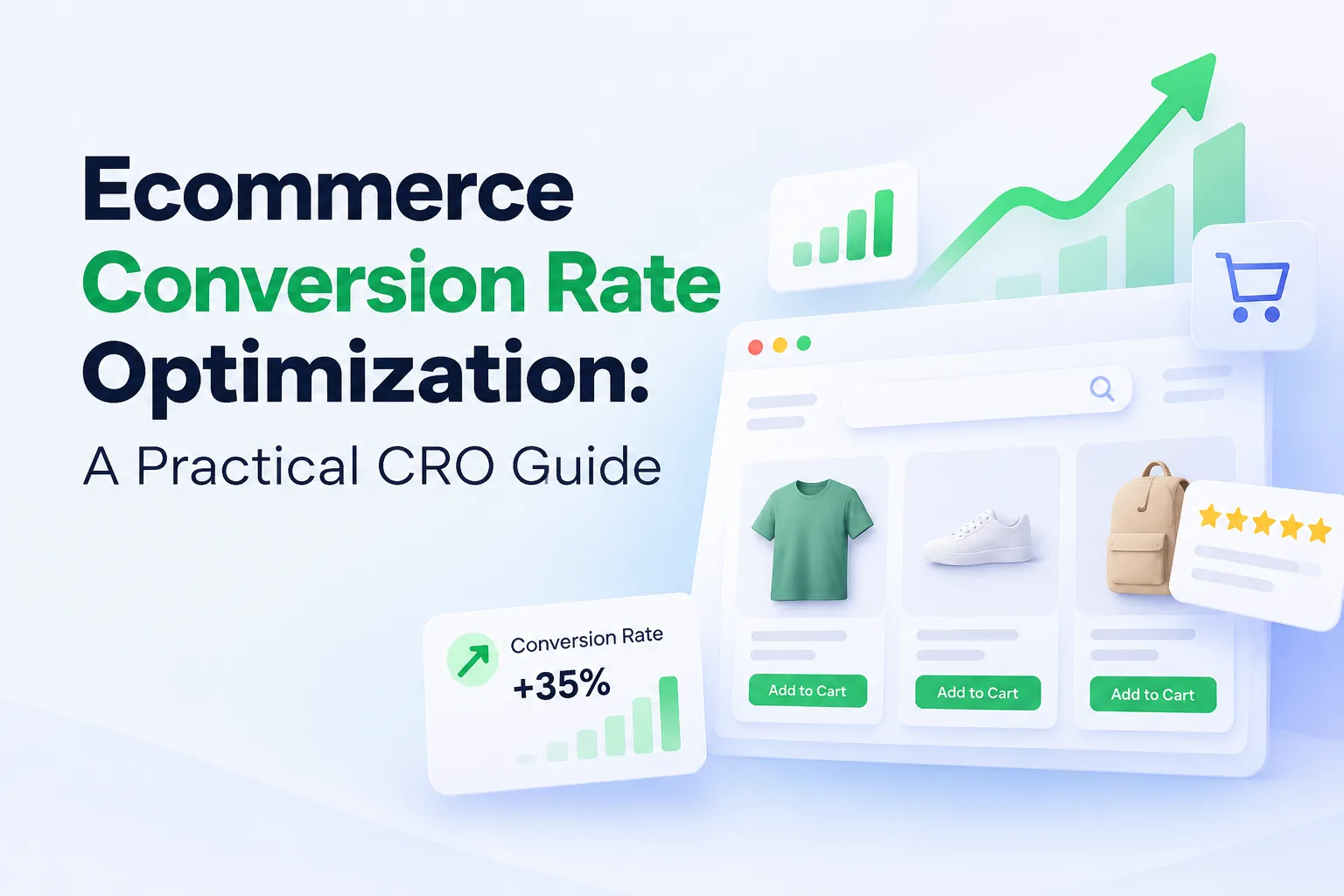
Ecommerce conversion rate optimization (CRO) is the process of improving an online store experience to increase the percentage of visitors who complete valuable actions, such as making a purchase. It involves identifying friction points across the customer journey, improving product discovery, and helping shoppers move from browsing to buying with less effort.
For e-commerce founders, growth is no longer only about bringing more visitors to a website. Rising customer acquisition costs mean brands need to focus on converting the traffic they already have. A store that understands customer behavior, removes obstacles, and creates a smoother shopping experience can generate more value from every visitor.
CRO helps brands identify where potential customers drop off—whether it is during product discovery, product evaluation, or checkout—and optimize those moments to improve the overall buying journey. Modern CRO is not limited to changing website layouts or testing button colors; it is about understanding shopper intent and creating experiences that help customers find the right products faster.
Key Takeaways:
Ecommerce CRO focuses on improving the entire customer journey, from product discovery to checkout, rather than only increasing purchases
Search experience, navigation, product relevance, and website usability play an important role in e-commerce conversions
Data-driven testing helps brands identify customer friction points and make informed optimization decisions
AI-powered search and discovery tools can help e-commerce stores better understand shopper intent and deliver more relevant product experiences
What is Ecommerce Conversion Rate Optimization?
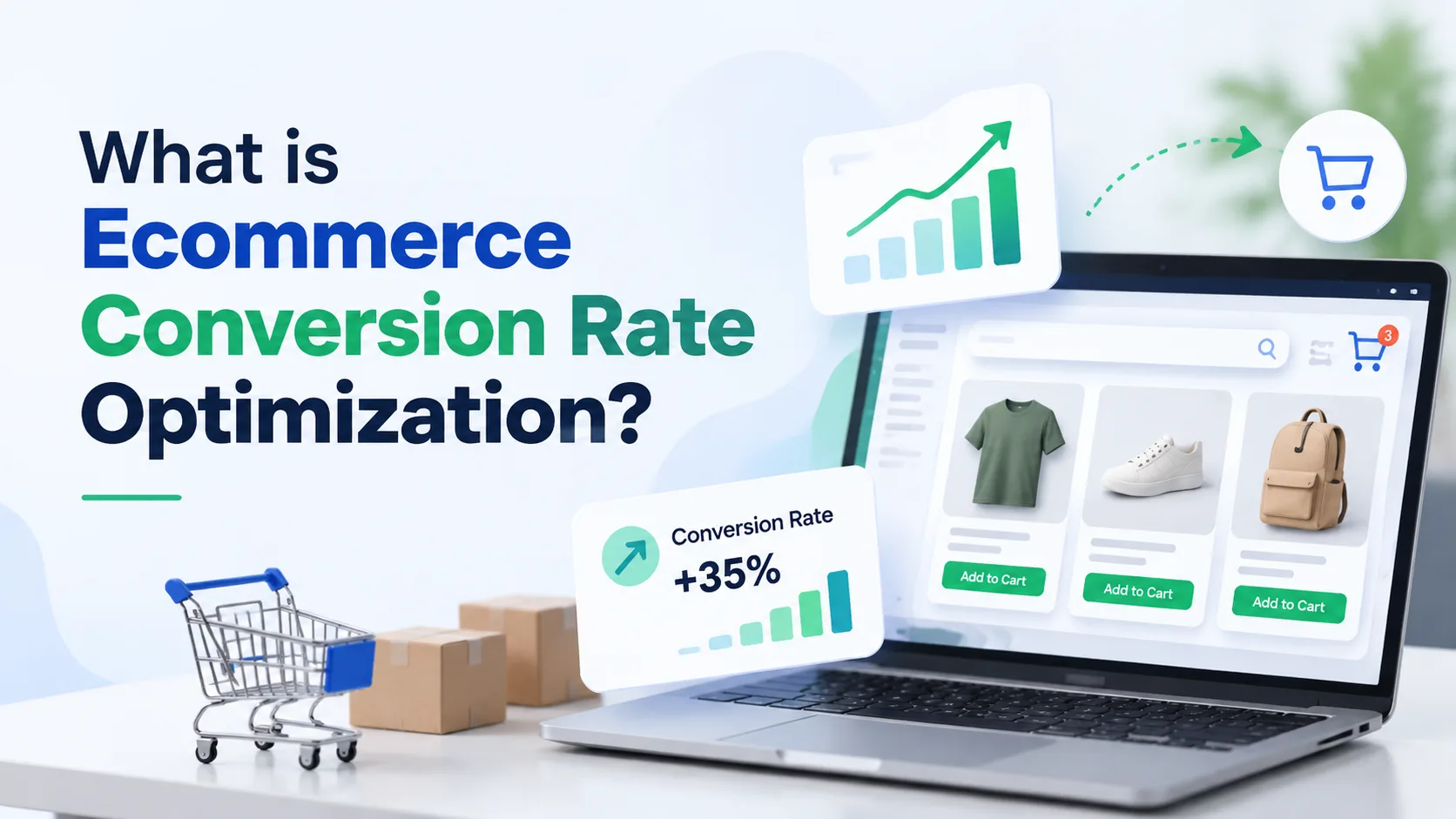
Ecommerce conversion rate optimization (CRO) is the process of improving an online store to increase the percentage of visitors who complete a desired action. While purchases are the most common conversion goal, CRO focuses on optimizing every step of the customer journey—from discovering products to completing checkout.
The basic e-commerce conversion rate formula is
Conversion Rate = (Number of Conversions ÷ Total Number of Visitors) × 100
For example, if an e-commerce store receives 50,000 visitors in a month and 1,000 visitors make a purchase, the conversion rate would be
(1,000 ÷ 50,000) × 100 = 2%
However, conversions are not limited to completed purchases. Depending on the brand’s goals, e-commerce conversions can include:
Purchases: The primary conversion goal for most online stores
Add-to-cart actions: Shows that visitors are interested enough to move closer to buying
Newsletter signups: Helps brands build relationships with potential customers who are not ready to purchase immediately
Product engagement: Includes actions such as viewing product details, using filters, comparing products, or interacting with recommendations
Looking at these smaller actions helps brands understand where customers are engaging and where they may be facing friction.
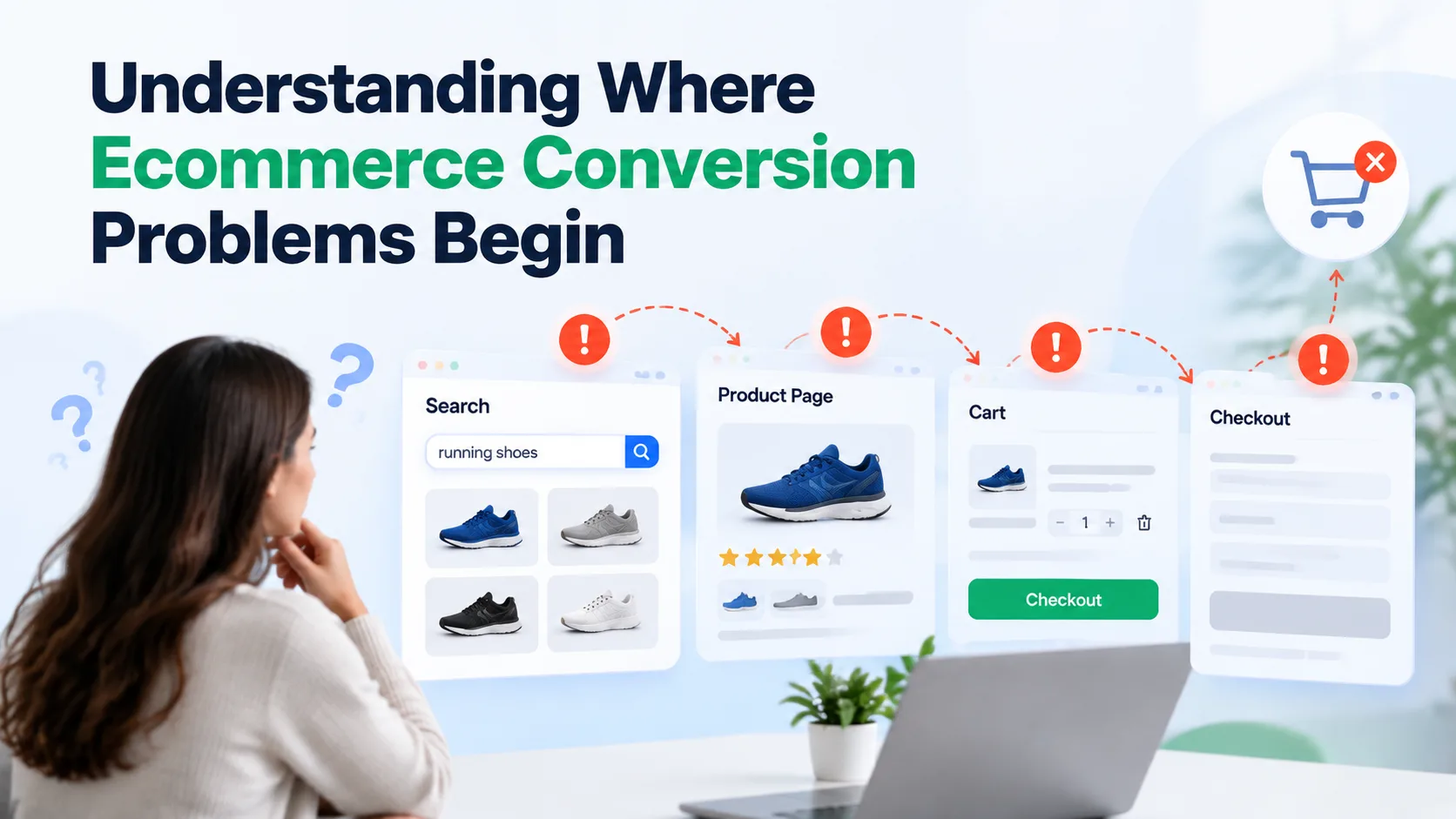
Understanding Where Ecommerce Conversion Problems Begin
Many e-commerce brands assume conversion problems happen mainly at checkout. However, customers can drop off much earlier in the buying journey—sometimes before they even reach a product page.
A shopper may leave because they cannot find the right product, lack important information, or encounter navigation issues. Identifying these problems early helps brands improve weak points across the buying journey.
1. Poor Product Discovery Creates Lost Sales Opportunities
Product discovery is one of the most important parts of e-commerce conversion optimization. If shoppers cannot quickly find products that match their needs, even high-intent visitors may leave without purchasing.
Traditional ecommerce search often relies heavily on exact keywords. This can create problems when customers use natural language or describe what they want instead of searching for a specific product name.
For example:
A shopper searching “gift for someone who likes coffee” may not know the exact product category they need
A customer searching “black sneakers for running” is looking for a combination of product attributes, not just the keyword “sneakers.”
Someone searching “small backpack for travel” is expressing a use case, size preference, and purpose.
Understanding the intent behind these searches helps e-commerce brands connect shoppers with more relevant products.
Large product catalogs can make this challenge even bigger. As the number of products increases, customers require better navigation, filtering, and search experiences to discover the right options.
Another important signal is zero-result searches—when customers search for something but receive no matching products. These searches often represent missed opportunities because they show what shoppers are actively looking for but cannot find.
Improving product discovery can help brands reduce friction, keep visitors engaged, and create a smoother path from search to purchase.
2. Unclear Product Information Slows Purchase Decisions
Even when shoppers find a relevant product, incomplete or unclear information can prevent them from moving forward.
Customers need enough confidence to answer basic questions before purchasing:
Is this the right product for my needs?
What makes this product different?
Does it offer the features I am looking for?
Can I trust this brand?
Common product page issues include:
Missing product details or specifications.
Generic descriptions that do not explain value.
Limited images or unclear visuals.
Lack of comparisons between similar products.
Missing answers to common customer questions.
Strong product pages reduce uncertainty by providing the information shoppers need at the right moment. Instead of forcing customers to search elsewhere, brands can guide them toward a purchase decision within their own store.
3. Checkout and Navigation Friction Reduces Conversions
A customer’s journey can be interrupted by small obstacles throughout the website experience. Even visitors who intend to purchase may abandon the process if the store feels difficult to navigate or complete a transaction.
Common friction points include:
Complicated navigation: Customers struggle to find categories, products, or important information
Slow-loading pages: Delays can negatively affect user experience, especially for mobile shoppers
Too many checkout steps: Lengthy processes create unnecessary barriers before purchase completion
Poor mobile experience: Difficult menus, unclear layouts, or slow interactions can cause shoppers to leave
A successful e-commerce experience should make every step feel intuitive—from discovering products to completing checkout. CRO focuses on identifying these moments of friction and improving them to create a smoother buying journey.
Why Is CRO Important for E-commerce Growth?
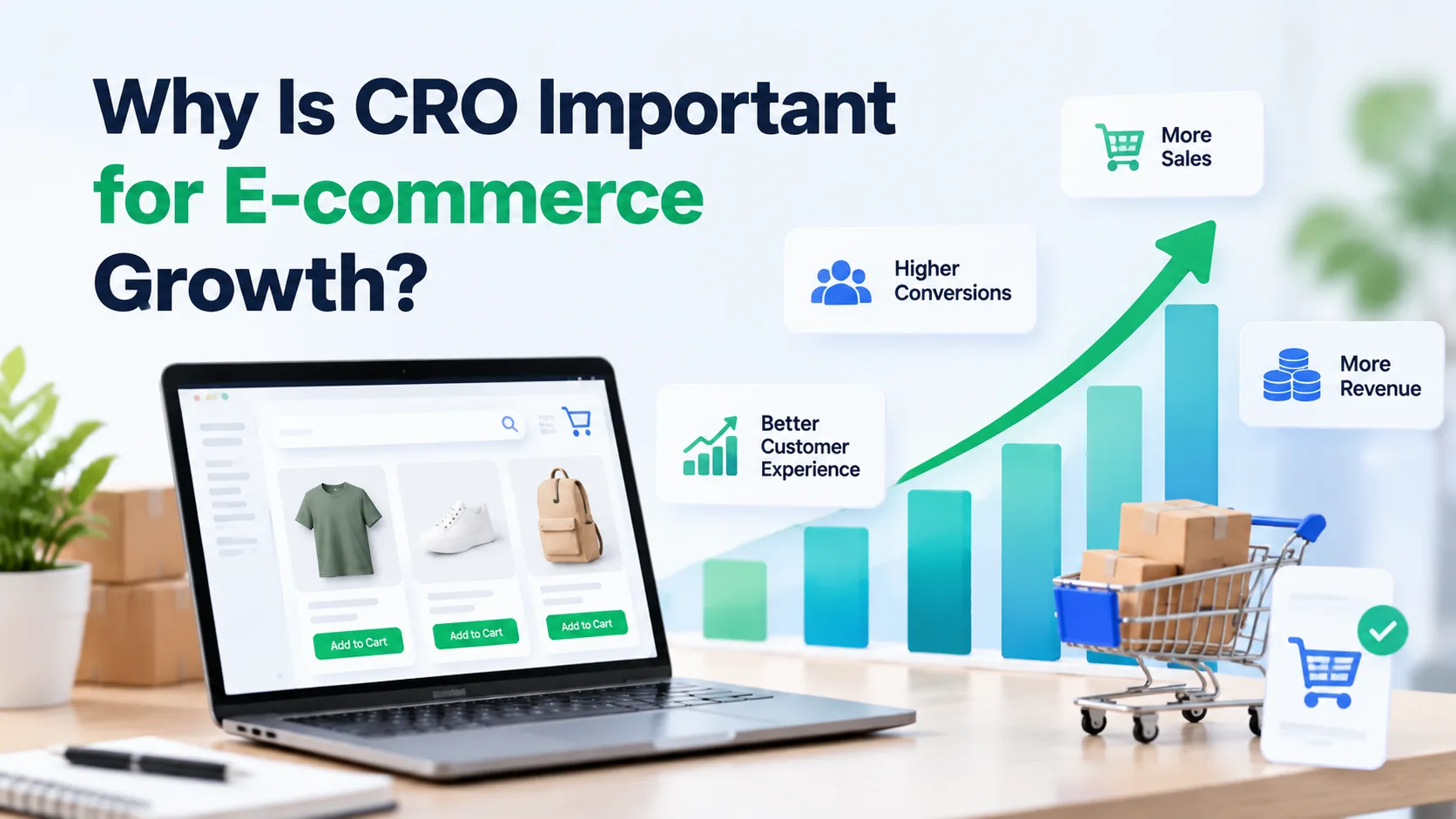
Ecommerce growth depends not only on attracting visitors but also on making better use of existing traffic. CRO helps brands improve the efficiency of their marketing investment by increasing the value generated from each visitor.
Key benefits include:
Increase revenue from existing visitors: Improve product discovery, website experience, and checkout flow to convert more shoppers without relying only on additional traffic
Improve customer experience: Remove obstacles that make shopping decisions harder and create a more intuitive buying process
Reduce wasted acquisition spend: Maximize the value of traffic generated through ads, SEO, and marketing campaigns
Understand shopper behavior: Use customer insights and data to identify what works, where users drop off, and what improvements can drive better results
Founder perspective: A store does not always need more visitors. Sometimes, it needs to help existing visitors find what they want faster and make confident purchase decisions
E-commerce Conversion Rate Optimization Strategies
Effective CRO requires a structured approach. Brands can improve conversions by optimizing the areas that have the greatest influence on customer decisions, including search, product pages, checkout, and analytics.
1. Improve Ecommerce Search and Product Discovery
Search plays a major role in e-commerce conversions because shoppers who use site search often have a clear purchase intent. However, traditional keyword-based search can struggle when customers use conversational phrases or describe what they need instead of using exact product names.
Modern e-commerce search focuses on understanding intent through:
Semantic search: Matches products based on meaning rather than exact keywords
Natural language understanding: Helps interpret conversational queries
Improved search relevance: Connects shoppers with more suitable products
Reduced zero-result searches: Prevents customers from leaving when their search does not match exact terms
Better search experiences help stores capture more opportunities from visitors who already show purchase intent.
2. Optimize Product Pages for Better Decision-Making
Product pages are where shoppers evaluate whether a product meets their needs. A well-optimized product page should provide the information customers need to make confident decisions.
Key improvements include:
Clear value propositions that explain why the product matters
Detailed product information and specifications
Customer reviews and social proof
High-quality images and videos
FAQs that address common questions
Trust signals such as policies, guarantees, and brand credibility
The goal is to reduce uncertainty and make the buying decision easier.
3. Simplify the Customer Journey
Once shoppers decide to buy, unnecessary steps can interrupt the path to checkout. CRO focuses on removing unnecessary steps and making navigation more intuitive.
Brands can improve the customer journey by:
Creating clear website navigation
Optimizing the mobile shopping experience
Helping shoppers reach relevant products faster
Removing unnecessary steps during checkout
A smoother journey reduces friction and helps customers move from discovery to purchase more efficiently.
4. Use Data to Identify Conversion Opportunities
CRO decisions should be based on customer behavior insights rather than assumptions. By analyzing how visitors interact with a store, brands can identify friction points and uncover opportunities to improve conversions.
Key metrics to monitor include:
Conversion rate: Shows overall store performance and how effectively visitors become customers
Add-to-cart rate: Indicates product interest and whether product pages encourage purchase intent
Cart abandonment rate: Highlights potential issues during checkout
Search exits: Reveals product discovery problems where customers search but cannot find relevant options
Bounce rate: Helps identify whether pages are meeting visitor expectations
Using these insights, e-commerce brands can prioritize high-impact improvements, test different solutions, and create a shopping experience that better matches customer expectations.
How Growmerce Helps E-commerce Brands Improve Conversion Rates
For e-commerce founders, improving conversion rates often comes down to one simple question: Can customers easily find what they are looking for?
For many e-commerce brands, improving conversions starts with improving product discovery. AI-powered search tools can help stores understand shopper intent and connect visitors with more relevant products.
For brands looking to improve search-driven conversions, AI-powered discovery tools are becoming an important part of modern CRO strategies. Growmerce helps e-commerce brands create smarter shopping experiences by understanding shopper intent, improving search relevance, and helping customers discover products more efficiently.
1. Help Customers Find What They Mean, Not Just What They Type
Traditional e-commerce search often depends on exact keyword matching. While this works for simple searches, it can struggle when customers describe their needs in a more natural way.
For example:
A shopper searching:
“comfortable office shoes under $100”
may not be looking for products labeled only as:
“formal shoes”
They are expressing multiple preferences—comfort, use case, and budget.
Growmerce helps brands move beyond basic keyword matching by understanding the intent behind customer searches and connecting shoppers with products that better match their needs.
2. Reduce Lost Sales From Zero-Result Searches
Every zero-result search represents a moment where a customer expressed interest but did not find a solution.
These searches can happen because of:
Different wording used by customers.
Product names that do not match shopper language.
Large catalogs that make discovery difficult.
Missing connections between related products.
Growmerce helps e-commerce stores handle these challenges by using AI-powered search capabilities that understand variations, synonyms, and natural language queries.
The result is a smoother discovery experience where customers are more likely to continue browsing instead of leaving the store.
3. Create More Relevant Shopping Experiences
As e-commerce catalogs grow, helping every customer find the right product becomes increasingly difficult. A generic shopping experience may force customers to spend more time searching, comparing, and deciding.
Growmerce helps brands create more relevant product discovery experiences by using shopper intent and behavior signals to improve how products are surfaced.
For e-commerce founders, this can help:
Reduce decision-making friction
Improve product visibility
Make large catalogs easier to explore
Create experiences that feel more aligned with customer needs
4. Turn Customer Search Behavior Into Growth Insights
Search data is one of the most valuable sources of customer intent. Every query provides insight into what shoppers want, what they struggle to find, and where the store experience can improve.
Growmerce helps brands uncover insights such as
Which products customers are actively searching for
Which searches are producing poor results?
Where customer demand does not match product visibility
These insights allow founders and e-commerce teams to make smarter decisions around merchandising, product optimization, and the overall customer journey.
The future of CRO is not just about testing website elements—it is about creating shopping experiences that understand customers better. By improving product discovery and search relevance, brands can remove friction and help more visitors find products they are ready to buy.
Building a Sustainable E-commerce CRO Process
CRO is not a one-time website update or a single experiment. The most successful e-commerce brands treat conversion optimization as an ongoing process of understanding customer behavior, identifying opportunities, testing improvements, and adapting to changing expectations.
A sustainable CRO process helps brands make informed decisions instead of relying on assumptions.
Step 1: Analyze Customer Behavior
The first step in CRO is understanding how customers interact with your store. Before making changes, brands need to identify where shoppers experience friction and where opportunities exist.
Useful sources of insights include:
Analytics: Understand visitor behavior, conversions, and drop-off points
Search data: Identify what customers are looking for and where product discovery may fail
Customer feedback: Learn directly from shopper questions, concerns, and challenges
Heatmaps: See how visitors interact with pages and where they engage or lose interest
Step 2: Identify High-Impact Improvements
Not every optimization opportunity will have the same impact. Brands should prioritize changes that can create the greatest improvement for both customers and business performance.
Focus on:
High-traffic pages: Optimize pages where small improvements can impact a larger audience
Revenue-driving products: Improve experiences around products that contribute significantly to sales
Common customer frustrations: Address issues that repeatedly prevent shoppers from completing purchases
Step 3: Test and Measure Changes
Successful CRO relies on testing rather than assumptions. Before implementing major changes across the website, brands should measure whether those changes actually improve performance.
This includes:
Running A/B tests to compare different experiences
Tracking key conversion metrics
Analyzing results and applying learnings to future improvements
Testing helps e-commerce teams understand what works for their specific customers.
Step 4: Continuously Optimize
Customer behavior, market trends, and shopping expectations continue to evolve. CRO is not a one-time project; it requires ongoing improvements to keep the e-commerce experience effective.
Continuous optimization involves:
Reviewing performance regularly: Monitor conversion metrics to identify new opportunities and challenges
Updating based on customer behavior: Adapt the shopping experience as customer preferences and search patterns change
Testing new ideas: Continue experimenting with improvements across product discovery, pages, and checkout
Improving based on insights: Use data and customer feedback to make informed decisions
For e-commerce founders, CRO should be treated as a long-term growth system that helps the store become more relevant, easier to navigate, and better aligned with customer needs.
Ecommerce CRO Mistakes Brands Should Avoid
Even with strong traffic and marketing efforts, e-commerce brands can lose potential sales by overlooking key parts of the customer journey. Avoiding these common CRO mistakes helps businesses create experiences that better support customer decisions.
1. Treating CRO as Only a Design Problem: A visually appealing website is important, but design alone does not guarantee conversions. If customers cannot find relevant products, understand product information, or complete purchases easily, a beautiful website will not solve the underlying conversion issues.
2. Ignoring Internal Search Data: Search behavior provides valuable insights into customer intent. Ignoring what shoppers search for can mean missing opportunities to improve product discovery, optimize product visibility, and address gaps in the catalog.
3. Making Changes Without Testing: CRO decisions should be based on data, not assumptions. Testing different approaches helps brands understand what actually improves customer experience and conversion performance.
4. Optimizing for Traffic Instead of Experience: More visitors do not always lead to more sales. If the shopping journey is confusing or customers struggle to find what they need, increased traffic may not translate into higher conversions. Brands should focus on creating a smoother experience that helps visitors move from discovery to purchase.
The Future of E-Commerce CRO: From Optimization to Intelligent Shopping Experience
Ecommerce CRO is moving beyond traditional website changes and manual testing. While analytics and experimentation will remain important, the future of conversion optimization will focus on creating smarter shopping experiences that understand customer needs and reduce friction.
AI is helping e-commerce brands analyze shopper behavior, understand intent, and deliver more relevant experiences throughout the buying journey.
Key shifts shaping the future of e-commerce CRO include:
Moving beyond manual optimization: CRO is evolving from simple website tweaks and A/B tests toward intelligent systems that continuously improve customer experiences
Using AI to understand customer intent: AI helps brands interpret shopper behavior, understand conversational searches, and deliver more relevant product experiences
Making search and discovery a core growth strategy: As customers use more specific and natural language queries, e-commerce brands need smarter search experiences that connect shoppers with the right products faster
Reducing friction through relevance: Brands that help customers find products, access information, and make decisions more easily can create smoother shopping journeys
For founders, the future of CRO is not only about increasing conversions—it is about building ecommerce experiences that understand customers better and make every interaction more valuable.
Conclusion
Ecommerce conversion rate optimization helps brands make smarter decisions about where customers struggle and where improvements can create the biggest impact.
Key points to remember:
CRO is about removing barriers: The easier it is for shoppers to evaluate options and complete purchases, the more effectively a store can convert existing traffic
Search experience influences conversions: A strong e-commerce search experience helps customers find relevant products faster and reduces missed opportunities caused by poor discovery
AI can improve e-commerce journeys: AI-powered tools can help brands better understand shopper intent, improve relevance, and create more personalized shopping experiences
For e-commerce founders, CRO is not just about increasing conversion numbers—it is about continuously improving how customers interact with the brand. The businesses that understand their shoppers and make product discovery effortless will be better positioned to grow in an increasingly competitive e-commerce landscape.
FAQs
1. What is a good e-commerce conversion rate?
There is no single conversion rate that applies to every store. A good rate depends on factors such as industry, traffic source, product category, pricing, and customer journey.
2. How does e-commerce search affect conversion rates?
Ecommerce search directly impacts conversions because shoppers who use search often have a clear purchase intent. A relevant search experience helps customers find products faster, while poor search results can lead to frustration and lost sales.
3. How can AI improve e-commerce conversion rates?
AI can improve e-commerce conversions by helping brands understand shopper intent, deliver more relevant search results, improve product recommendations, and create more personalized shopping experiences.
4. Why do e-commerce stores have low conversion rates?
Common reasons for low conversion rates include poor product discovery, unclear product information, slow website performance, complicated navigation, checkout friction, and a lack of trust signals.
5. How long does it take to see results from CRO?
The timeline for CRO results depends on factors such as website traffic, the changes being tested, and the quality of data available. CRO is an ongoing process that requires continuous testing and optimization.